Flooring: Comprehensive Guide to Selection, Installation, and Maintenance
Flooring is a foundational element of any space, influencing both its aesthetic appeal and functional performance. Choosing the right flooring is not just about appearance; it involves considering durability, maintenance, comfort, and long-term value. From residential homes to commercial environments, flooring plays a crucial role in shaping the atmosphere, providing safety, and reflecting personal or brand style. In this article, we will explore in-depth strategies, materials, installation techniques, and maintenance practices to ensure you make informed flooring decisions that balance design, performance, and longevity.
Understanding the Importance of Flooring
Flooring impacts a space far beyond its visual aspect. It sets the tone for interior or exterior design and affects practical elements such as safety, acoustics, and maintenance.
Key reasons why flooring is essential include:
- Visual impact: Flooring establishes the base for interior color schemes, textures, and design coherence.
- Durability: Well-chosen materials withstand wear and tear, foot traffic, and environmental changes.
- Comfort and safety: Proper flooring minimizes slips, provides cushioning, and supports mobility.
- Maintenance and cost-efficiency: High-quality flooring reduces cleaning frequency, repair needs, and long-term expenses.
- Property value enhancement: Attractive and durable floors significantly improve resale potential and market appeal.
Flooring Materials: Options and Characteristics
Selecting the right material depends on the purpose of the space, local climate, expected foot traffic, and budget.
Hardwood Flooring
Hardwood remains a premier choice for timeless elegance and durability. Species such as oak, maple, cherry, and walnut provide rich color and natural grain patterns.
- Advantages: Can be refinished multiple times, adds warmth and sophistication, and has high resale value.
- Considerations: Susceptible to moisture damage and temperature fluctuations; requires regular polishing or refinishing.
- Best applications: Living rooms, dining areas, hallways, and bedrooms.
Engineered Wood
Engineered wood consists of a hardwood veneer layered over plywood or high-density fiberboard, providing stability and moisture resistance.
- Advantages: Less likely to warp compared to solid wood; suitable for basements and kitchens.
- Considerations: Limited ability to refinish; quality varies by veneer thickness.
- Best applications: Moisture-prone areas, mid-level residential spaces, and commercial zones.
Laminate Flooring
Laminate is a cost-effective alternative that simulates wood, stone, or tile surfaces using photographic layers on a composite base.
- Advantages: Scratch-resistant, easy to clean, and affordable.
- Considerations: Vulnerable to water damage and cannot be refinished.
- Best applications: Bedrooms, living rooms, and low-moisture commercial spaces.
Vinyl and Luxury Vinyl Tiles (LVT)
Vinyl flooring, particularly luxury vinyl tiles, combines durability, moisture resistance, and realistic aesthetic options.
- Advantages: Waterproof, low-maintenance, and highly versatile in design.
- Considerations: Subfloor preparation is critical; some low-quality products may emit VOCs.
- Best applications: Bathrooms, kitchens, laundry areas, and heavily trafficked spaces.
Ceramic and Porcelain Tiles
Tiles provide long-lasting durability, a wide array of design choices, and excellent moisture resistance. Porcelain tiles are denser and more resistant than ceramic tiles.
- Advantages: Stain-resistant, versatile in pattern and texture, suitable for wet environments.
- Considerations: Hard surfaces can be uncomfortable for prolonged standing; grout needs periodic sealing.
- Best applications: Bathrooms, kitchens, mudrooms, and outdoor patios.
Natural Stone
Stone flooring, such as marble, granite, slate, or travertine, offers luxury, unique textures, and longevity.
- Advantages: Extremely durable, visually striking, and increases property value.
- Considerations: Higher cost, requires sealing, and can be slippery when wet.
- Best applications: Entryways, kitchens, bathrooms, and feature spaces.
Carpet
Carpet provides softness, warmth, and sound insulation, enhancing comfort in living spaces.
- Advantages: Noise reduction, insulation, variety in texture, color, and pile height.
- Considerations: Requires frequent cleaning; susceptible to staining; may trap allergens.
- Best applications: Bedrooms, living rooms, offices, and lounges.
Bamboo and Cork
Eco-friendly alternatives, bamboo is strong and hard, while cork offers cushioning and sound absorption.
- Advantages: Renewable resources, sustainable, and distinct aesthetics.
- Considerations: Bamboo scratches easily; cork needs sealing to prevent moisture damage.
- Best applications: Eco-conscious residential areas, low-traffic spaces, and flooring for creative interiors.
Flooring Patterns and Styles
The layout and pattern of flooring can dramatically influence room perception and design flow.
Plank Flooring
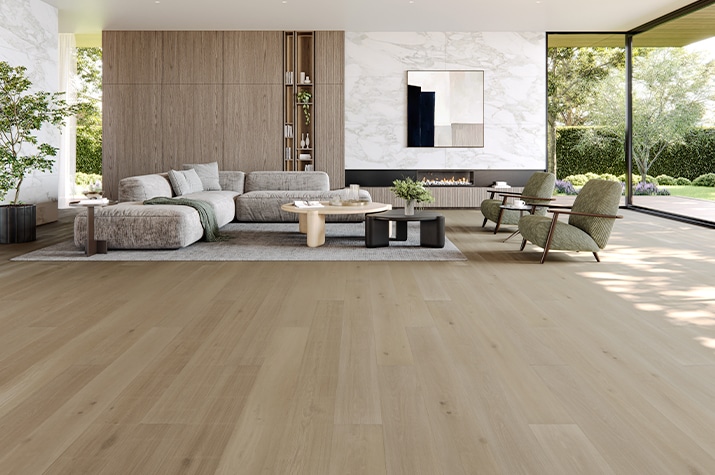
Continuous long planks enhance the sense of space and provide a sleek, traditional appearance. Suitable for hardwood, laminate, or vinyl materials.
Herringbone and Chevron Patterns
Geometric designs like herringbone or chevron add elegance and visual interest, ideal for statement spaces.
Checkerboard and Mosaic
Tile-based patterns such as checkerboard or mosaic are striking choices for kitchens, bathrooms, and accent areas.
Large Format Tiles
Large tiles reduce grout lines, creating a modern, minimalistic appearance while simplifying cleaning and maintenance.
Mixed Materials
Blending materials, such as wood with tile or carpet with stone, defines functional zones within open-plan layouts and enhances design flexibility.
Installation Considerations
Proper installation ensures optimal performance and longevity for any flooring type.
Subfloor Preparation
A clean, level, and dry subfloor prevents warping, uneven wear, and future repairs. Materials like concrete, plywood, or existing flooring may require additional leveling or underlayment.
Expansion and Contraction
Floors like hardwood and bamboo expand and contract with humidity. Leaving expansion gaps avoids buckling or deformation.
Professional vs. DIY Installation
Certain materials, such as tile, stone, or solid hardwood, require professional installation to guarantee precision, warranty compliance, and long-term performance.
Fastening and Adhesives
- Glue-down: Common for tiles and vinyl, ensures stability.
- Nail-down or Staple-down: Used for hardwood to secure planks.
- Floating Floors: Laminate and engineered wood often feature interlocking systems without adhesive.
Maintenance and Care
Regular maintenance preserves appearance, safety, and longevity.
Cleaning Practices
- Hard surfaces: Sweep or vacuum regularly; mop with pH-neutral cleaners.
- Carpet: Vacuum frequently; spot-clean stains promptly and schedule professional deep cleaning.
- Tiles and stone: Seal grout; remove debris to prevent scratches.
Protective Measures
- Use area rugs in high-traffic areas.
- Add furniture pads to prevent scratching.
- Limit direct sunlight exposure to prevent fading.
Repair and Refinishing
- Hardwood floors can be sanded and refinished multiple times.
- Cracked tiles may require individual replacement.
- Carpets may need patching or full replacement based on wear patterns.
Sustainable Flooring Options
Eco-friendly flooring aligns design with environmental responsibility.
- Reclaimed wood: Reduces deforestation while offering unique character.
- Bamboo and cork: Rapidly renewable, reducing ecological impact.
- Recycled vinyl or composites: Utilize post-consumer materials.
- Low-VOC adhesives and finishes: Promote healthier indoor air quality.
Real-Life Tips for Flooring Selection
- Lifestyle assessment: High-traffic areas with children or pets demand durable, low-maintenance options.
- Aesthetic and functionality balance: Ensure material complements design style without compromising practicality.
- Smooth transitions: Use thresholds or moldings to seamlessly connect different flooring types.
- Prioritize investment areas: Focus on kitchens, entryways, and hallways with resilient surfaces.
- Sample evaluation: Test materials in natural and artificial light for accurate color and texture perception.
Flooring FAQ
Which flooring is best for heavy traffic areas?
Ceramic tiles, porcelain tiles, and high-quality luxury vinyl tiles are ideal due to their resistance to wear and scratches.
How often should hardwood floors be refinished?
Refinishing every 7–10 years is standard, depending on traffic and maintenance habits.
Can hardwood be installed in a basement?
Solid hardwood is not recommended for basements; engineered wood or vinyl planks are more suitable due to moisture resistance.
Is underfloor heating compatible with all flooring types?
Engineered wood, vinyl, and tile generally work well with underfloor heating, but manufacturer guidelines should be followed.
Which flooring is easiest to maintain?
Luxury vinyl tiles and laminate are low-maintenance, resistant to moisture, and simple to clean.
Can mixed-material flooring create a cohesive design?
Yes, combining materials can define zones and add aesthetic interest while maintaining functional separation.
What are sustainable flooring alternatives for eco-conscious homeowners?
Options include bamboo, cork, reclaimed wood, and recycled composite materials.
How can I prevent flooring damage from furniture?
Use protective pads under furniture legs and avoid dragging heavy items across the floor surface.
Flooring is a long-term investment that directly impacts comfort, safety, and aesthetics. By understanding materials, installation techniques, maintenance requirements, and sustainable options, homeowners and designers can create spaces that are both beautiful and functional, ensuring value and longevity for years to come.